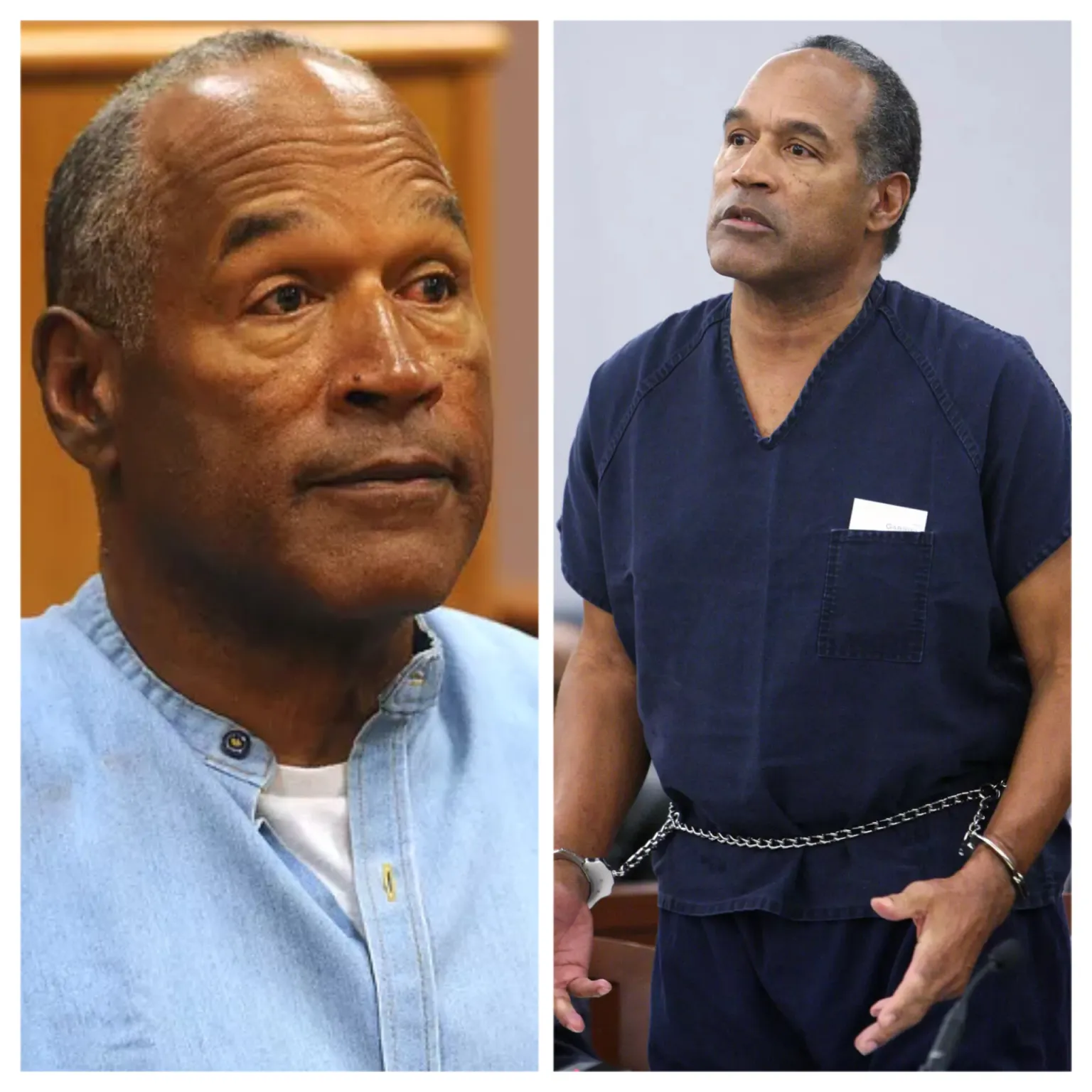
O.J. Simpson is a name synonymous with both gridiron greatness and later descent into controversy. He led a life marked by athletic brilliance, captivating celebrity, and a shocking legal case that continues to resonate today.
From his early days overcoming hardship to become a college and professional football star, to his transition into television personality and actor, Simpson’s trajectory was tragically altered by the murders of 1994.
This article delves into the complexities of his life, exploring his athletic achievements and the legacy of the events that forever changed his public image.
O.J. Simpson’s Biography

Orenthal James Simpson, better known as O.J. Simpson, was born on July 9, 1947, in San Francisco, situated in the U.S. state of California. His life story was a complex one, marked by athletic brilliance, meteoric success, and a later fall from grace.
Simpson’s upbringing was far from privileged. Born into a working-class family in the Potrero Hill district, a predominantly Black neighbourhood of San Francisco, his early years were marked by both hardship and resilience.
His parents separated when he was young, leaving his mother to raise him and his siblings. At the tender age of two, Simpson contracted rickets, a debilitating bone disease, forcing him to wear leg braces for several years. Despite this setback, young O.J. displayed a natural athletic talent that would become his defining characteristic.
Galileo High School in San Francisco witnessed the blossoming of Simpson’s athletic prowess. Initially playing tackle, he transitioned to fullback, showcasing his power and agility. However, it was on the track that his raw speed truly shone. He even participated in a world-record-setting 440-yard relay team. Football, though, remained his calling.
Financial constraints limited Simpson’s college options. He initially enrolled at San Francisco City College, a junior college, to improve his academic standing. There, his football skills continued to attract attention, paving the way for a scholarship offer from the prestigious University of Southern California (USC).
Simpson’s early life provides a crucial context for understanding his later trajectory. Growing up in a working-class neighbourhood instilled in him a strong work ethic and a determination to succeed. Overcoming challenges like rickets further honed his resilience. While details about his family life remain limited, it is evident that his mother played a significant role in shaping his character.
However, the Potrero Hill district of his youth also presented challenges. Gang culture was prevalent and Simpson himself has acknowledged a brief affiliation with a local gang.
O.J. Simpson’s Career

Simpson’s athletic prowess manifested early at Galileo High School in San Francisco. Initially playing tackle, his exceptional speed and power eventually led him to excel as a fullback. He also displayed remarkable talent on the track, participating in a world-record-setting 440-yard relay team. Despite these athletic achievements, financial constraints limited his college options.
San Francisco City College (a junior college) became his initial stepping stone, where he honed his skills and attracted the attention of prestigious universities like the University of Southern California (USC).
Enrolling at USC in 1967 under the tutelage of legendary coach John McKay, Simpson embarked on a journey that would redefine college football.
McKay’s innovative run-oriented offence, perfectly suited to Simpson’s skillset, unleashed his potential. Nicknamed “The Juice” for his elusive running style and explosive agility, he shattered numerous records. Notably, he became the first player in USC history to rush for over 1,000 yards in a single season (1967), a feat he would repeat the following year.
The year 1968 marked the pinnacle of Simpson’s college career. As the undisputed lead running back, he spearheaded a dominant USC offence. His electrifying performances captivated audiences, leading the Trojans to a resounding victory in the Rose Bowl against the University of Iowa. The season culminated in the most prestigious individual honour in college football – the Heisman Trophy.
Simpson secured the award with a record-breaking margin, further solidifying his status as a national icon.
Simpson’s college statistics speak volumes about his dominance. In a mere 22 games, he amassed an astonishing 3,423 rushing yards and 36 touchdowns. He led the nation in rushing yards for two consecutive seasons (1967 and 1968).
Beyond individual accolades, his impact on the team was undeniable. USC, with Simpson as its offensive cornerstone, achieved a remarkable record of 19-2-1, including a national championship and two Pac-8 conference titles.
While primarily known for his prowess as a running back, Simpson demonstrated versatility on the field. He displayed a natural aptitude for returning punts and kickoffs, showcasing his elusiveness and speed in a different context.
Professional Football Career
O.J. Simpson’s transition from college football hero to professional superstar was highly anticipated. Drafted first overall in the 1969 NFL draft by the Buffalo Bills, immense expectations surrounded him. He did not disappoint, embarking on a professional career that solidified his reputation as one of the greatest running backs of all time.
Despite joining a struggling Buffalo Bills team, Simpson’s impact was immediate. His electrifying running style, honed during his college years, translated seamlessly to the professional game.
He shattered franchise records, becoming the Bills’ all-time leading rusher, a record that still stands today (as of April 13, 2024). His dominance was evident in his rushing yardage, consistently surpassing 1,000 yards per season, a feat then considered a significant accomplishment.
The 1973 season stands as a landmark in Simpson’s professional career. Under the guidance of coach Chuck Knox, the Bills’ offence thrived, and Simpson became the undisputed star.
In a remarkable feat, he surpassed the coveted 2,000-yard rushing mark in a mere 14-game season, a record that remains unmatched in NFL history. This accomplishment earned him the prestigious NFL Most Valuable Player (MVP) award, solidifying his position as the league’s most dominant running back.
While rushing yards became his signature statistic, Simpson’s contributions extended far beyond. He possessed a unique blend of power and agility, making him a constant threat in the passing game. His receiving abilities added another dimension to the Bills’ offensive strategy, keeping defences on their toes.
Furthermore, his skills as a kick returner remained valuable, showcasing his versatility and ability to contribute in various ways.
Simpson’s achievements were numerous. He was a six-time Pro Bowl selection, a five-time First-team All-Pro, and led the league in rushing yards four times and rushing touchdowns twice. However, significant team success with the Bills remained elusive. Despite his brilliance, the Buffalo team struggled to consistently compete for championships.
In 1978, Simpson was traded to the San Francisco 49ers, a move closer to his hometown. While his dominance continued, injuries began to take their toll. He played just one full season with the 49ers before announcing his retirement in 1979.
Acting Career
Simpson’s foray into acting and media began well before the tumultuous events that would overshadow his later years. Simpson’s acting career commenced in the mid-1970s. His initial roles were primarily in exploitation films, such as “The Klansman” (1974). However, his charm and athleticism soon attracted opportunities in mainstream television and cinema.
He appeared in popular shows like “Monday Night Football” as a commentator, showcasing his knowledge of the game and engaging personality. Additionally, he secured guest appearances in sitcoms like “Roots” (1977) and “Diff’rent Strokes” (1979), demonstrating his comedic potential.
One of Simpson’s most recognisable media personas emerged through his long-standing association with the Hertz car rental company. Beginning in 1978, he became the face of their advertising campaigns, portraying a friendly and trustworthy figure. This association, spanning over a decade, further solidified his image as a likeable and relatable celebrity.
Simpson’s most significant acting success came in the form of the “Naked Gun” franchise. This comic police procedural series, featuring Leslie Nielsen as the bumbling detective Frank Drebin, capitalised on Simpson’s comic timing. Playing Detective Nordberg, Drebin’s perpetually frustrated partner, Simpson displayed a natural comedic talent, delivering memorable one-liners and slapstick routines.
His participation in all three films (“Police Squad!”, 1982; “The Naked Gun: From the Files of Police Squad!”, 1988; and “Naked Gun 33⅓: Final Insult”, 1994) solidified his persona in the public eye.
Following his arrest and subsequent trial in 1994, Simpson’s media and acting opportunities dwindled significantly. Public perception shifted dramatically, making it difficult for him to secure mainstream roles.
However, he did appear in a few productions in the 2000s, primarily playing himself in documentaries and docuseries. His final on-screen appearance came in 2018 with a brief cameo in Sacha Baron Cohen’s satirical mockumentary “Who is America?”
O.J. Simpson’s Stats
Here’s a breakdown of Simpson’s impressive career statistics across various categories:
Rushing:
- Rushing Yards: 11,236 (21st all-time in NFL history as of April 13, 2024)
- Rushing Touchdowns: 61
- Rushing Attempts: 2,500 (approx.) Note: Rushing attempts weren’t officially tracked until 1982
- Yards per Carry Average: 4.5 (approx.) Note: Same as rushing attempts
- Four-time NFL Rushing Champion (1972, 1973, 1975, 1976)
- First player in NFL history to rush for over 2,000 yards in a season (1973)
Receiving:
- Receiving Yards: 2,142
- Receiving Touchdowns: 14
- Kick Returns:
- Kick Return Yards: 990
- Kick Return Touchdowns: 1
All-purpose yards:
- Total all-purpose yards: 14,368
Accolades:
- NFL Most Valuable Player (MVP) Award (1973)
- Six-time Pro Bowl selection (1969, 1972-1976)
- Five-time First-Team All-Pro selection (1972-1976)
- Inducted into the Pro Football Hall of Fame (1985)
College Statistics (USC):
- Rushing Yards: 3,423
- Rushing Touchdowns: 36
- Heisman Trophy Winner (1968)
ALSO READ: Roman Polanski: Controversial Film Director and US Fugitive
O.J. Simpson’s Controversy

The life of Simpson is undeniably divided into two distinct parts: The celebrated athlete and the controversial figure. This dramatic shift stemmed from the highly publicised events of 1994, forever altering public perception.
The Double Murders and Subsequent Arrest (1994)
On June 12, 1994, the brutal murders of Nicole Brown Simpson, O.J.’s ex-wife, and her friend Ronald Goldman rocked Los Angeles and the nation. Simpson quickly became the prime suspect, leading to a high-speed chase with police that transfixed the media and captivated the public.
A Race-Divided Nation and the Trial of the Century (1994-1995)
Simpson’s subsequent trial became a media spectacle, dubbed “The Trial of the Century”. The prosecution presented a compelling case, citing blood evidence and witness testimonies.
However, the defence, led by a team of high-profile attorneys, focused on alleged police misconduct and racial bias within the Los Angeles Police Department (LAPD). The case ignited racial tensions in the United States, with many viewing it as a symbolic trial highlighting historical injustices faced by Black Americans.
The “Not Guilty” Verdict and Public Outrage (1995)
In a dramatic conclusion, the jury delivered a verdict of “not guilty” on October 3, 1995. The decision sparked widespread outrage and public disbelief. Many felt the evidence pointed towards Simpson’s guilt, while others believed the prosecution had failed to make a strong enough case. The racial dynamics of the trial further fueled the controversy.
Civil Trial and Financial Repercussions (1996-2007)
Despite the criminal verdict, the families of the victims pursued a civil lawsuit against Simpson. In 1996, a jury found him liable for the wrongful deaths of Nicole Brown Simpson and Ronald Goldman, awarding a significant financial settlement. This legal outcome, while not a criminal conviction, further tarnished his reputation.
Simpson remained a controversial figure throughout his later years. In 2007, he was involved in an armed robbery in Las Vegas, leading to his imprisonment and eventual parole in 2017.
In December 2021, O.J. Simpson was released early from parole by the Nevada Division of Parole and Probation on grounds of good behaviour.
O.J. Simpson’s Net Worth
As against public claims of $3 million, Simpson had an estimated net worth of $500-$1 million at the time of his demise.
O.J. Simpson’s Family

Marguerite Whitley (1967-1979)
Simpson’s first marriage was to Marguerite Whitley in 1967 when he was just 19 years old. They welcomed a daughter, Arnelle, in 1968. However, their relationship reportedly faced strain as Simpson’s football career took off. The couple divorced in 1979, shortly before Simpson began a relationship with Nicole Brown.
Nicole Brown Simpson (1985-1992)
In 1977, Simpson met Nicole Brown, a young waitress, while still married to Marguerite. Their relationship blossomed and they married in 1985, five years after Simpson retired from football. Their union produced two children, Sydney and Justin.
However, the marriage was marred by allegations of domestic violence. Brown filed for divorce in 1992, citing irreconcilable differences. Tragically, both Brown and her friend Ronald Goldman were murdered in 1994, forever casting a long shadow over Simpson’s life.
Life After Divorce: No Further Marriages
Following the highly publicized events of 1994, Simpson did not remarry. While there were rumours of relationships, he remained single for the rest of his life.
O.J. Simpson’s Age
Simpson was born on July 9, 1947. He died at the age of 76.
O.J. Simpson’s Death

Simpson revealed a cancer diagnosis in May 2023, expressing optimism about overcoming it. He reportedly began chemotherapy treatment soon after. News reports in February 2024 confirmed he was battling prostate cancer.
Just a week and a half before his passing, Simpson cancelled a planned memorabilia signing due to feeling unwell. In his final days, all his children came to visit him.
The illness, however, claimed his life on April 10, 2024, at the age of 76. At the time of his death, Simpson resided in Las Vegas, near the Rhodes Ranch Golf Club.