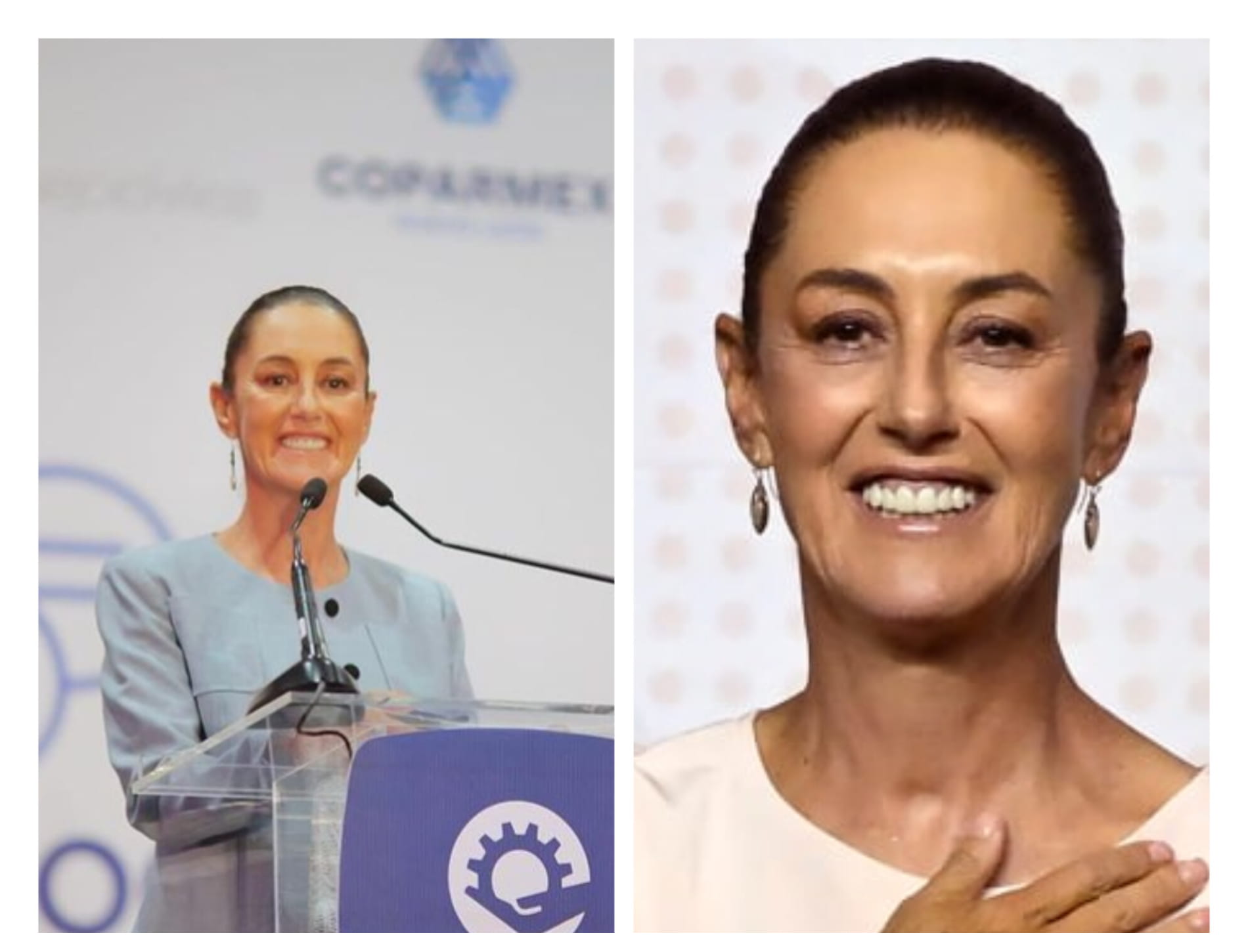
Claudia Sheinaum, the President-elect of Mexico, stands at the threshold of history as she prepares to assume the highest office in the North American country. With her recent landslide victory in the presidential election, Sheinbaum has captured the attention and imagination of the nation, heralding a new era in Mexican politics.
As the first woman set to ascend to the presidency, her triumph signifies a significant milestone in the country’s democratic evolution.
Claudia Sheinbaum biography

Claudia Sheinbaum Pardo has made significant strides as an academic and a politician in Mexico. Born on June 24, 1962, in Mexico City, Sheinbaum’s story is deeply intertwined with her cultural heritage and intellectual pursuits.
Sheinbaum grew up in a family that valued education and scientific inquiry. Her father, Carlos Sheinbaum Yoselevitz, is a well-respected chemical engineer and her mother, Annie Pardo Cemo, is a biologist and professor at the National Autonomous University of Mexico (UNAM).
This academic environment undoubtedly influenced Claudia’s path, instilling in her a profound respect for scientific principles and intellectual rigour from an early age.
ALSO READ: Keir Starmer: Meet UK’s ‘Working Class’ Ex-Prime Minister
Claudia Sheinbaum career

Sheinbaum’s career started in the academia. She began at the National Autonomous University of Mexico, where she pursued a degree in Physics. She quickly distinguished herself as a dedicated and brilliant student. After completing her undergraduate degree, Sheinbaum continued her education at UNAM, obtaining a master’s degree in Energy Engineering.
Her academic pursuits did not stop there. Driven by a desire to contribute to sustainable development and environmental protection, Sheinbaum earned a PhD in Energy Engineering from UNAM. Her doctoral thesis focused on the energy consumption and carbon emissions of the Mexican transportation sector, reflecting her burgeoning interest in environmental issues.
Sheinbaum’s professional career is marked by a blend of academic and practical engagements. After obtaining her PhD, she worked as a researcher at UNAM, contributing to numerous studies and publications on environmental science and engineering.
Her research has been influential, shedding light on critical issues such as energy efficiency, renewable energy sources and climate change mitigation.
In addition to her academic work, Sheinbaum has been an active member of various environmental and scientific organisations. She has served as a consultant for the United Nations Environment Programme (UNEP) and has been involved in numerous international conferences and workshops on sustainable development and environmental policy.
Claudia Sheinbaum politics

Sheinbaum’s entry into the political arena was shaped by a deep commitment to social justice and environmental sustainability. While her academic achievements laid a solid foundation, it was her growing concern for the practical application of scientific principles to address societal challenges that propelled her into politics.
Her early political career began with her involvement in the Party of the Democratic Revolution (PRD), a major left-wing political party in Mexico. Upon joining the PRD in the late 1990s, Sheinbaum quickly became a prominent voice within the party, advocating for policies that intertwined environmental sustainability with social equity.
ALSO READ: Ree Marie: Model Thrilling Audience With ‘The School Pick Up Line Mom’ On TikTok
The PRD, known for its progressive stance and support for marginalised communities, provided an ideal platform for Sheinbaum’s ambitions. Her expertise in energy engineering and environmental science allowed her to address the environmental dimensions of urban policy effectively.
In 2000, her political career took a significant leap forward when Andrés Manuel López Obrador, then the newly elected Head of Government of the Federal District (a position equivalent to the Mayor of Mexico City), appointed Sheinbaum as the Secretary of the Environment for Mexico City. This role marked her first major foray into public office, offering her a unique opportunity to implement her academic insights on a grand scale.
As Secretary of the Environment, Sheinbaum faced the daunting task of addressing Mexico City’s severe environmental challenges. The city, one of the largest and most polluted urban centres in the world, required innovative solutions to its pressing problems of air pollution, traffic congestion, and inadequate public transportation.
Sheinbaum’s tenure from 2000 to 2006 was marked by several groundbreaking initiatives:
- 1. Air Quality Improvement: Under her leadership, Mexico City launched comprehensive programmes to reduce air pollution. Sheinbaum promoted the use of cleaner fuels, tighter emission controls for vehicles, and the adoption of more stringent industrial pollution standards. Her policies were instrumental in achieving noticeable improvements in the city’s air quality.
- 2. Green Transportation: Recognising the critical link between transportation and environmental health, Sheinbaum championed the expansion and modernisation of Mexico City’s public transportation system. She was a key proponent of the Metrobus, a bus rapid transit system that has become a cornerstone of the city’s efforts to reduce reliance on private vehicles.
- 3. Renewable Energy and Energy Efficiency: Sheinbaum’s background in energy engineering informed her push for renewable energy projects and greater energy efficiency in public buildings. She initiated programmes to install solar panels and improve the energy efficiency of government facilities, setting an example for private sector adoption.
- 4. Public Awareness and Education: Understanding that lasting environmental change requires public support, Sheinbaum launched campaigns to raise awareness about environmental issues. These initiatives included educational programmes in schools and community outreach efforts to promote sustainable practices among residents.
After her tenure as Secretary of the Environment, Sheinbaum returned to academia. She resumed her research at the National Autonomous University of Mexico (UNAM), focusing on the intersection of environmental science and public policy. Her academic work during this period continued to influence her political thinking, reinforcing her belief in evidence-based policymaking.
Sheinbaum’s early political experiences with the PRD and her subsequent academic work set the stage for her return to the political forefront with the National Regeneration Movement (MORENA), a new political party founded by López Obrador. MORENA’s platform, which emphasised anti-corruption, social justice and sustainable development, resonated with Sheinbaum’s values and goals.
In 2015, Sheinbaum was elected as the Delegation Chief of Tlalpan, one of Mexico City’s boroughs. This position provided her with a critical opportunity to implement her ideas on a more local level, focusing on issues such as urban development, public safety and environmental protection.
Her leadership in Tlalpan was marked by efforts to improve public services, enhance community participation in governance, and address longstanding environmental concerns. Her successful tenure in Tlalpan bolstered her reputation and positioned her as a leading figure within MORENA.
By 2017, she had emerged as a strong candidate for the Mayor of Mexico City. Her campaign, deeply rooted in her environmental and social justice credentials, resonated with a broad spectrum of voters.
In 2018, Sheinbaum made history by becoming the first woman elected as Mayor of Mexico City.
Running as a candidate for the National Regeneration Movement (MORENA), she won the election with a significant majority. Her victory was seen as a testament to her dedication, expertise and commitment to public service.
On June 12, 2023, Claudia Sheinbaum announced her resignation as head of government of Mexico City, to participate in the Mexican presidential candidate selection for the Juntos Hacemos Historia coalition, which includes Morena, the Labor Party and the Ecologist Green Party of Mexico.
The coalition’s selection process took place from August 28 to September 4, 2023. On September 6, 2023, Sheinbaum was declared the winner with 39.38 per cent of the vote, defeating Marcelo Ebrard by about 13 points. On November 19, 2023, she registered as the sole pre-candidate of the successor coalition, Sigamos Haciendo Historia, and formally registered her candidacy with the National Electoral Institute (INE) on February 18, 2024.
The Mexican presidential election on June 2, 2024, saw Sheinbaum projected as the winner by the INE’s quick count. Final results on June 6, 2024, confirmed her landslide victory by 32 points. She achieved the highest number of votes ever for a candidate in Mexican history, carried 31 out of 32 states and secured the highest vote percentage since 1982.
These elections were notably violent, with at least 23 political candidates killed during the campaign period. It marked the 2024 general elections as the most violent in modern Mexican history.
Claudia Sheinbaum’s net worth
According to reports, Sheinbaum’s net worth is between $5 million to $10 million.
Claudia Sheinbaum family
Sheinbaum is currently married to Jesús María Tarriba Unger, a financial risk analyst for the Bank of Mexico. The duo began dating in 2016 and got married in November 2023.
Previous marriage
Before her marriage with Unger, Sheinbaum was previously married to Carlos Imaz Gispert, a prominent political figure in the PRD. They tied the knot in 1987 after meeting during his tenure at Stanford University.
Together, they welcomed a daughter in 1988 and Sheinbaum embraced her role as a stepmother to Imaz’s son from a previous marriage. However, after nearly three decades together, Sheinbaum and Imaz decided to part ways in 2016.
Claudia Sheinbaum age
Sheinbaum was born on June 24, 1962. She will be 62 years old in 2024.
Claudia Sheinbaum now
Claudia Sheinbaum is the President-elect of Mexico, having won the country’s presidential election on June 2, 202,4 by a significant margin. She succeeded Andrés Manuel López Obrador.