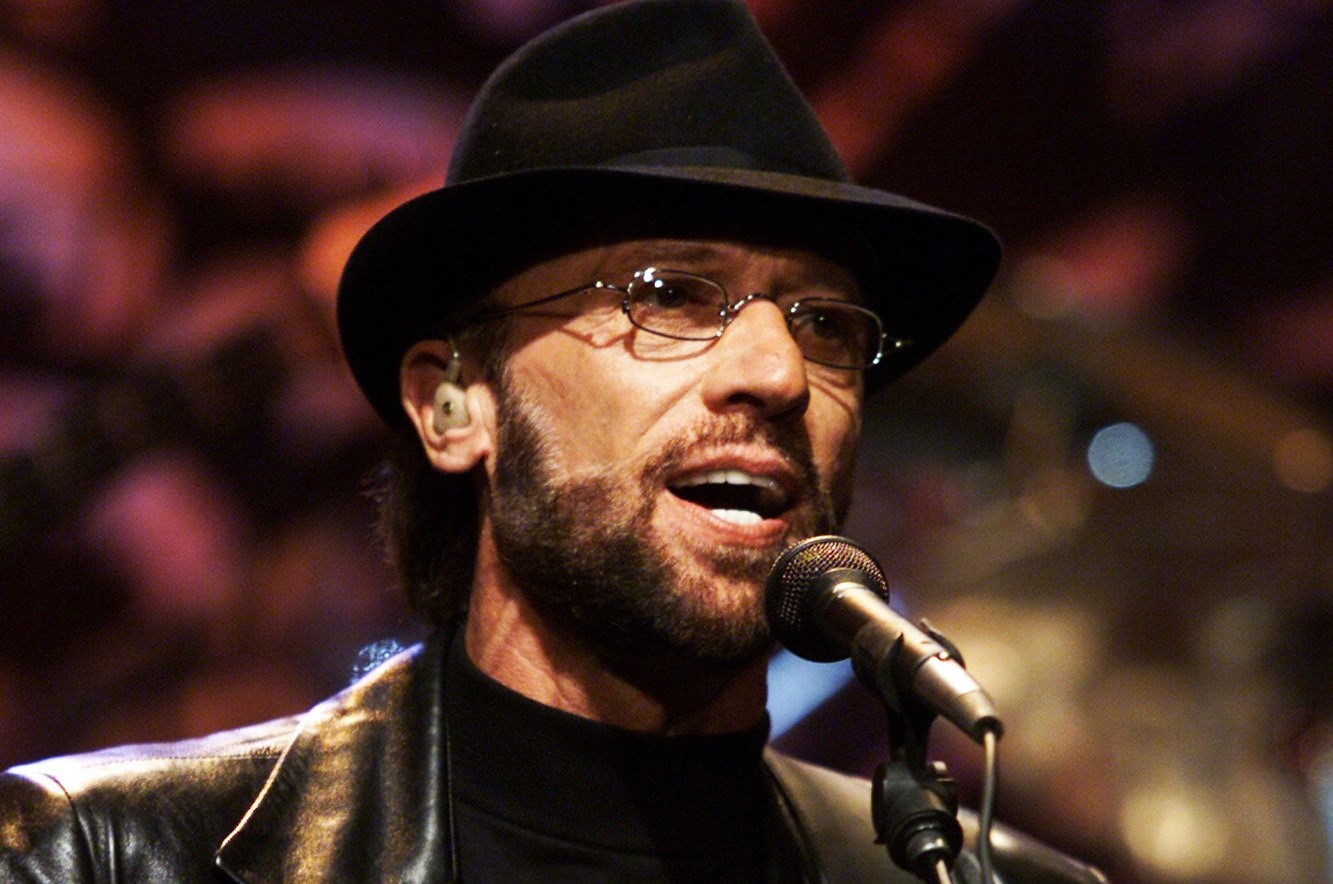
Maurice Gibb was a talented musician known for his role in the famous group, the Bee Gees. Born into a musical family, he showed an early passion for music that would shape his life and career. With his brothers, Maurice created timeless songs that touched the hearts of many.
But what made Maurice Gibb such a memorable figure in the music world? Read this piece to find out.
Maurice Gibb biography

Maurice Gibb was born on December 22, 1949, in Douglas, Isle of Man. He was one of the three famous Gibb brothers, born to parents Hugh and Barbara Gibb. From an early age, it was clear that Maurice and his siblings had a natural talent for music. The family moved around during his childhood, spending time in Manchester, England, before eventually settling in Australia when Maurice was about nine years old. This move would later play a significant role in shaping his life and early interests.
Gibb grew up in a musical household, as his father was a bandleader. This environment and the close bond he shared with his brothers, Barry and Robin, led him to start exploring music from a young age. Maurice often sang and played instruments alongside his brothers, a hobby that would later define his path.
Education was not Gibb’s primary focus, as music quickly became his main passion. By the time he was a teenager, he and his brothers were already performing in local venues, trying to make a name for themselves.
Some of his early ventures included forming a music group with his brothers, although this was long before their international fame. They started small, playing at local events and trying to catch the attention of music producers. Despite their early struggles, Maurice remained determined, showing a strong work ethic and passion for creating music.
He was also talented in various instruments, including the bass guitar and keyboards, skills that would later serve him well in his musical career.
ALSO READ: Cody Fern: Stylish Actor Loved For His Edgy Fashion Style, Impressive Acting
Maurice Gibb career
Gibb’s music career began when he and his brothers, Barry and Robin, formed the Bee Gees. In the early 1960s, while living in Australia, the brothers worked hard to gain recognition. They performed at local venues and recorded several singles, but their big break came in 1967 when they returned to England. It was here that they signed a record deal and released their first international hit, New York Mining Disaster 1941. This song introduced the world to the Bee Gees and marked the start of their successful career.
In 1966, he became a session musician in Australia, playing for artists like Bip Addison, Anne Shelton, and Jon. Later, in the late 1960s, he worked with his neighbour, Ringo Starr, on a song called Modulating Maurice, though it was never released.
Throughout the late 1960s and early 1970s, Gibb and his brothers released a series of hit songs, including To Love Somebody and Massachusetts. Their unique blend of harmonies set them apart from other bands. Gibb often played multiple instruments, including bass guitar, keyboards, and rhythm guitar. His musical versatility was a key part of the Bee Gees’ sound.

By the 1970s, Gibb worked with some of the biggest names in music. He played piano on George Harrison’s song, Isn’t It a Pity, and worked alongside famous musicians like Phil Collins and Billy Preston. He produced Lulu’s 1971 hit, Everybody Clap, which featured legends like John Bonham on drums. Furthermore, he worked with artists like Billy Lawrie and produced Jimmy Stevens’ album Don’t Freak Me Out.
In the mid-1970s, the Bee Gees made a bold shift in their style, embracing the rising disco trend. This move turned out to be a major success. They contributed several songs to the Saturday Night Fever soundtrack in 1977, including the massive hits, Stayin’ Alive and Night Fever. The album became one of the best-selling soundtracks of all time and solidified the Bee Gees as global superstars.
In the late 1970s and 1980s, Gibb’s musical partnerships continued to grow. He co-produced the Osmonds’ album, Steppin’ Out, and helped write The Love That Was Lost. He also teamed up with Tim Rice to create Last Affair of the Heart, sung by Elaine Paige. Gibb supported his brothers’ solo projects too, often singing background vocals and playing instruments for them.
Despite their success, the group faced challenges. By the early 1980s, the popularity of disco music declined and the Bee Gees’ fame dimmed. However, Gibb and his brothers adapted. They continued to write and produce music for themselves and other artists.
Gibb also pursued solo projects during his career, though his focus remained on the Bee Gees. His solo projects allowed him to explore his musical style and these endeavours showcased his versatility as a musician.
In 1970, Gibb released his first solo single, Railroad. Around the same time, he began working on a solo album titled: The Loner. However, the album was never officially released. Despite this, some tracks from the project have since surfaced and are appreciated by fans as rare insights into his solo artistry.
Aside from writing and releasing his music, Gibb also contributed to the work of other artists. One of his notable collaborations was with the British singer Lulu, who was married to his brother, Barry, for a time. Gibb co-wrote and produced some of her songs. His ability to blend genres and work with different musicians made him a sought-after collaborator in the music industry.
During the 1980s, Gibb joined in on the Bunbury songs and worked with singer Carola. One of his final works was playing keyboards on the demo for I Cannot Give You My Love, with Barry Gibb singing lead vocals.
Maurice Gibb songs

Here is a coherent outline of Gibb’s notable songs throughout his career, both with the Bee Gees and during his solo ventures. The list includes his work as a performer, songwriter and producer.
Solo songs:
- “Railroad” (1970) – His most notable solo single, released during a brief period when the Bee Gees disbanded.
- “I’ve Come Back” (1970) – The B-side to Railroad.
- “Hold Her in Your Hand” (1984) – A song from the soundtrack to the film A Breed Apart.
- “On Time” (1970) – Featured on the Bee Gees’ 2 Years On album, but credited as a Maurice Gibb solo track in some releases.
Collaborations and contributions:
- “Saved by the Bell” – Gibb played piano on this track for Robin Gibb’s solo album.
- “Mother and Jack” – Gibb played bass on this song, also for Robin’s solo project.
- “Isn’t It a Pity” – Gibb contributed piano to George Harrison’s song from the album All Things Must Pass.
- “Everybody Clap” (1971) – Produced and played the guitar for Lulu’s hit single.
- “Modulating Maurice” – An unreleased track with Ringo Starr.
- “The Love That Was Lost” – Composed with Blue Weaver, it featured in the late 1970s.
- “Last Affair of the Heart” – Co-written with Tim Rice and recorded by Elaine Paige.
- “Shine, Shine” – Co-wrote this track with Barry Gibb, which later became a Top 40 hit for Barry in the US.
- “Baby Come on Home” – Co-produced this song with Billy Lawrie in 1972.
- “Spirit of the Snow” (1982) – Written for the film A Christmas Carol.
Production work:
- “Don’t Freak Me Out” (1972) – Produced Jimmy Stevens’ album (also known as Paid My Dues in the US).
- “Steppin’ Out” (1978) – Co-produced the Osmonds’ album, which included a cover of the Bee Gees’ Rest Your Love on Me.
Maurice Gibb’s net worth
According to sources, Gibb’s net worth at the time of his death in 2003 was estimated to be around $100 million. As a member of the Bee Gees, one of the most successful music groups in history, Gibb amassed significant wealth through album sales, tours and royalties from their extensive catalogue of hits.
Maurice Gibb family

Gibb came from a family deeply rooted in music and close-knit personal relationships. He was one of five children born to Hugh and Barbara Gibb. His father, Hugh, was a bandleader and drummer, while his mother, Barbara, took on the role of a homemaker, nurturing the children. The Gibb family included Maurice’s twin brother, Robin, elder brother Barry, younger brother Andy, and their sister, Lesley.
The Gibb family moved frequently due to their father’s work and aspirations for his sons in the music industry. After their early years in the Isle of Man, the family relocated to Manchester, England, before eventually migrating to Australia in 1958.
Gibb married twice. His first marriage was to Scottish singer, Lulu, in 1969. Their marriage was high-profile but the relationship was tumultuous due to Gibb’s struggles with alcohol. They eventually divorced in 1973. Despite the split, they remained on good terms.
His second marriage was to Yvonne Spenceley, whom he wed in 1975. This marriage was far more stable and Yvonne became a key figure in Gibb’s life, helping him through his battles with addiction. Together, they had two children: a son, Adam, born in 1976, and a daughter, Samantha, born in 1981. Both Adam and Samantha grew up out of the public eye, though Adam later ventured into music.
Gibb was particularly close to his twin brother, Robin. The two shared a unique bond and often collaborated as part of the Bee Gees. The three brothers were inseparable during their professional careers, though they had occasional sibling rivalries and tensions.
Gibb also had a strong relationship with his younger brother, Andy Gibb, who pursued a solo music career. Unfortunately, Andy’s life was marked by personal struggles with substance abuse, and he died at a young age in 1988, an event that deeply affected the entire Gibb family.
Maurice Gibb’s later years were more focused on family and he spent much of his time in Florida, USA, with his wife, Yvonne, and their children.
Maurice Gibb age
Gibb was 53 years old at the time of his death.
Maurice Gibb death

Maurice Gibb passed away on January 12, 2003, at the age of 53, following complications from a surgery related to an intestinal blockage. In the days leading up to his death, Gibb had undergone emergency surgery to address this issue, which had been causing him severe pain.
Despite the operation being initially deemed successful, Gibb’s condition deteriorated. He developed a severe cardiac arrest during the procedure, which ultimately led to his death. The news of his passing came as a shock to fans and the music community. Following his death, tributes poured in from fans, fellow musicians and friends who commemorated Gibb’s impact on the music industry.